



Description
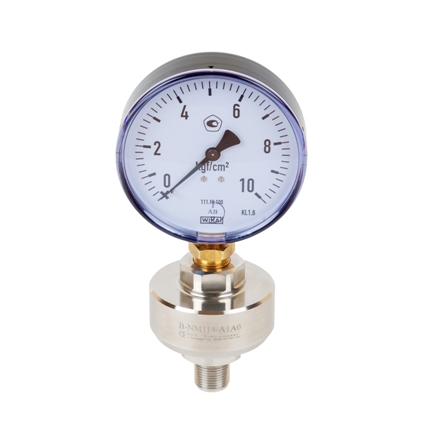
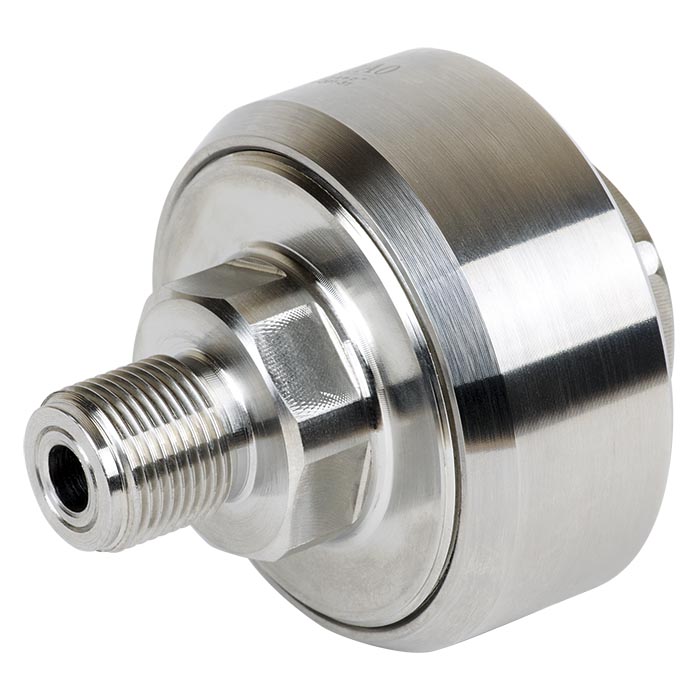
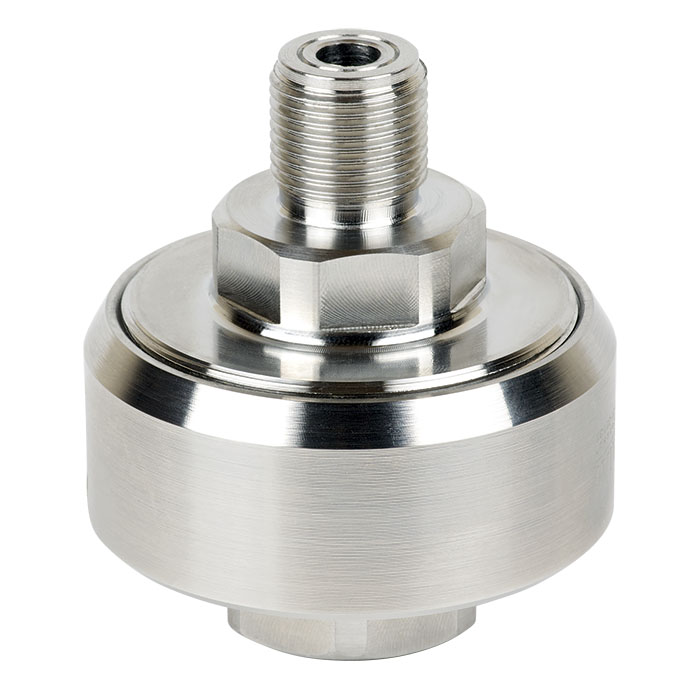
The separation vessel is designed to protect the sensitive element of a measuring instrument (pressure gauge, pressure transmitter, pressure relay, etc.) from exposure to a wide range of aggressive operating media.
Due to the possibility of diffusion through the rubber diaphragm (PTFE bellows), it is not recommended for measuring the pressure of gaseous aggressive media.
Applications
-
Non-viscous aggressive media
-
Contaminated or solidifying aggressive media
-
Aggressive or food-grade products
-
Contaminated or solidifying moderately aggressive media
-
Viscous, solidifying hydrocarbons (fuel oil, etc.)
Design: Detachable, with internal diaphragm (bellows).
Process connection: Nozzle, metric thread, BSP or NPT.
Features: Does not require vacuum filling; possibility of replacing individual parts.
Accuracy, %: 0…0.5
Operating pressure range, kgf/cm²: –1…200
Additional information: Reference codebook for Separation Vessel Type B.
Characteristics
| Connection | nozzle, threaded |
| Connection to Measuring Device | internal thread, metric, BSP or NPT |
| Construction | Detachable |
| Cover Design | Standard; Special (with overload protection); Universal (with damper); Vacuum (with nozzle for vacuum filling) |
| Cover Material | carbon steel; stainless steel; PTFE F-2M; molybdenum steel |
| Housing Material | carbon steel; stainless steel; lined steel; PTFE F-2M; molybdenum steel; chromium-nickel steel; Hastelloy; titanium |
| Internal Volume, cm³ | 12…150 |
| Maximum Displaced Volume, cm³ | 5…100 |
| Maximum Operating Pressure, kgf/cm² | 25…350 |
| Operating Temperature Range, °C | -50…200 |
| Process Connection | nozzle with external or internal metric, BSP, or NPT thread |
| Separation Element | bellows; diaphragm |
| Separation Element Diameter, mm | 32…74 |
| Separation Element Material | PTFE F-4; rubber |